That 'Not Secure' Badge on Your Router Login Page: When to Click Through and When to Walk Away
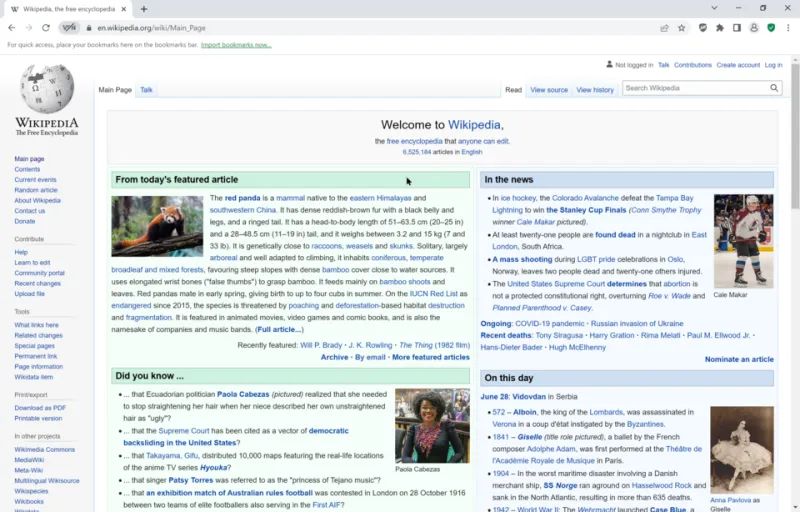
Photo: Tauin, CC BY-SA 4.0, via Wikimedia Commons
The warning that stops everyone at the door
You open a browser, type the gateway address, and instead of a login box you get a gray triangle and the words Not secure sitting in the address bar. For a moment, the sensible instinct is to close the tab. That instinct is worth keeping, but it is not a reason to abandon router administration altogether.
Router management pages are among the last common places on the web that still run over plain HTTP, and browsers have spent the past several years making that fact impossible to ignore. The badge is a statement about how the page travels, not a judgment about who is on the other end. Understanding the difference is the whole exercise.
Why the badge shows up on a perfectly healthy router
Most consumer routers serve their admin panel from a private address such as 192.168.1.1 or 192.168.0.1. Two things follow from that.
First, if the page is loaded over HTTP, there is no encryption between your browser and the router. Chrome and Edge label every HTTP page as not secure, whether it is a router or a decades-old hobby site.
Second, even when the panel is served over HTTPS, the certificate backing it is almost always self-signed. The router generated it locally; no public certificate authority vouched for it. Browsers respond with a full-page interstitial, usually carrying an error such as NET::ERR_CERT_AUTHORITY_INVALID or a name mismatch notice, because the certificate names the router model or a vendor hostname rather than the bare IP address in your address bar.
There is a third, often overlooked cause: an expired certificate. Routers have no reliable clock before they reach the internet. After a power cut or a factory reset, the device may believe the date is somewhere in the early 1970s, which makes a perfectly valid certificate appear to have expired years ago. Once the router syncs time, the warning frequently disappears on its own.
Confirm you are actually talking to your router
Before you decide whether to proceed, establish where the page came from. This takes about thirty seconds.
- Look at the address bar. A literal private IP address is the normal case. A domain name, a URL shortener, or a search-result landing page is not.
- Verify the gateway on your own device. On Windows, run
ipconfigand read the Default Gateway. On macOS, check System Settings, then Network. If the number in the address bar does not match, stop. - Pull the internet connection. Disconnect the cable or cable modem feed and reload the page. A genuine local admin panel will still load, because it never needed the internet. A remote page will fail. This single test catches a surprising share of impostor login screens.
- Reach it by bookmarks, not by search. Advertisements and sponsored results for common router login terms have been used to place convincing copies of admin pages in front of users.
The cases where proceeding is reasonable
Clicking through is defensible when all of the following hold: the URL is a private IP address you verified yourself, the certificate is self-signed by the router manufacturer or named for the device, you reached the page from a network you control, and the page asks only for a username and password.
In that situation, the warning is describing a real but bounded weakness: someone with access to your local network segment could observe the exchange. On a home network you control, that risk is modest, which is why manufacturers still ship panels this way.
The cases where you should close the tab
The same badge becomes a genuine alarm under different circumstances. Treat any of the following as a stop signal:
- The certificate was issued by a recognizable public authority for a domain you never typed. That pattern suggests you are on a lookalike site.
- You are bounced through a redirect to a different address immediately after loading the panel.
- The page requests information a router never needs: a Social Security number, card details, a remote-access fee, or a phone number to call for support.
- A file download begins on its own.
- You are on hotel, airport, or café Wi-Fi and the login page appears after you connect. Captive portals imitate admin panels closely.
- Your browser warns about an unexpected certificate name on a network you do not administer, which can indicate interception on that network.
A practical routine before you type the password
Open the certificate viewer from the warning panel and read three fields: who issued it, what name it covers, and when it expires. An issuer matching your router brand, a subject matching the model, and an expiration date within the last few years are all consistent with normal operation. A public authority, an unfamiliar company name, or a validity window measured in days is not.
Then log in from a private browsing window with extensions disabled, change the default administrator password if you have not already, confirm the firmware is current, and bookmark the correct address so you never have to find it again through a search engine.
The warning is information, not a verdict. Read it, verify the destination, and act on what you find.